Mother of God
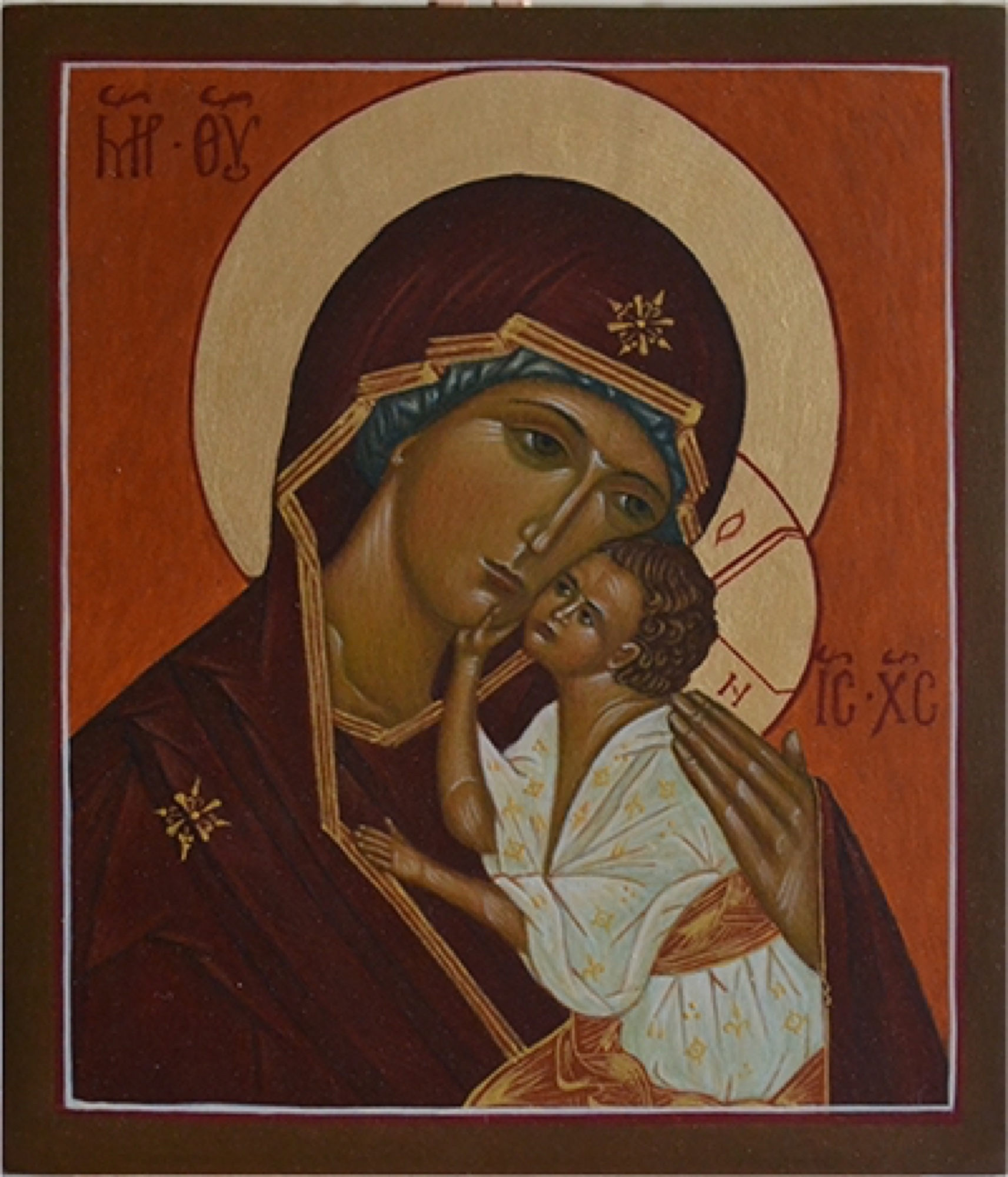
Yaroslavl Mother of God
- date
- 2013
- time taken
- 1 month
- place
- Poland
- technique
- lime-wood panel, egg tempera, imitation gold leaf (Schlagmetall)
description
An icon of the Eleousa type. It is a depiction of Mary and Jesus in a very tender relationship. In Byzantium this type was known as Glykophilousa (Greek: sweet kiss). The Child sits upright in the arms of the Mother of God, holding His Mother’s chin with His right hand and the edge of Her robe near the neck with His left. The Child’s legs are held together, and only the feet are uncovered. According to Orthodox tradition, this icon was the first image to appear during the period of Mongol bondage of the Rus' lands, in 1238, soon after Batu Khan’s invasion of Rus'. It was brought to Yaroslavl by the holy princes Basil and Constantine. The history of this icon is very interesting. It was venerated for centuries, but at times its memory faded, and later it was remembered once again. The most recent revival of the icon’s veneration has taken place in recent years. Lost during the communist period, the icon was found in 1998 in an old shed near Rostov the Great. After several years of conservation, the icon went to Saint Petersburg and then, in 2003, to Yaroslavl. The Tretyakov Gallery in Moscow holds an old 15th-century copy of this icon.
how it was made
Another icon of this type. I hope that one day I will manage to show this tenderness....
Icon written for my nephew and godson Sebastian.